
Con Dao named one of the world's best places to watch turtle releases

Con Dao among world's top 7 destinations for sea turtle releases
Tuesday, 12:06, 21/04/2026VOV.VN - Six Senses Con Dao in Ho Chi Minh City has been named one of seven destinations offering structured sea turtle conservation programmes, allowing visitors to take part in controlled, educational release activities, according to Condé Nast Traveler's Earth Day list.
According to the magazine, nestled into the dunes along a crescent-shaped beach backed by verdant hills, Six Senses Con Dao, the 50-villa retreat, shields guests from the outside world.
Con Dao is an archipelago off the coast of southern Vietnam, and much of it falls within Con Dao National Park, which covers both land and surrounding marine area. The islands are among the most important sea turtle nesting sites in the country, which is why a resort operating an incubation centre here works in partnership with the park rather than independently.
Condé Nast Traveler noted that the resort is also home to the Let's Get Cracking Incubation Center, a sanctuary for endangered green sea turtles that opened in 2018 in collaboration with Con Dao National Park.
A centre of this kind exists because hatch rates on an open beach are low. Nests are dug up by monitor lizards and feral dogs, washed out by storms, and poached, so conservation programmes either protect nests in place or move clutches to a guarded enclosure and release the hatchlings once they emerge. Both approaches are used, and which is preferable depends on the site.
The center has since nurtured and safely released around 30,000 hatchlings into the ocean, with a hatch success rate of 82%.
An 82 per cent hatch success rate is high compared with natural nests, where losses to predation, flooding and infertile eggs routinely take a large share of a clutch. The number released is not the same as the number that survive, and programmes are generally careful about that distinction: sea turtle hatchlings face very high mortality at sea, and only a small fraction of any cohort reaches adulthood.
"Each year, from early March to October, the hotel's quiet and untouched 1.24-mile beach transforms into a sacred nursery where mother turtles return faithfully, drawn by the safety and calm this protected sanctuary provides, to lay their eggs", the magazine revealed.
The March to October window covers the nesting season for green turtles at these beaches. Females come ashore at night, dig a chamber above the tide line, lay a clutch and return to the sea, repeating the cycle several times in a season before migrating back to feeding grounds. They return to the same region to nest in later years, which is why protecting a specific beach matters more than protecting coastline in general.
Incubation temperature determines the sex of the hatchlings. Warmer sand produces mostly females and cooler sand mostly males, which is why shading nests and managing incubation conditions is a conservation concern rather than a detail, and why rising sand temperatures are treated as a long-term risk to nesting populations.
Condé Nast Traveler said education and guest engagement remain key pillars of the resort's conservation approach. Through Turtle Talks, interactive sessions led by the resort's sustainability team, guests gain a deeper understanding of sea turtle biology, behavior, and the conservation challenges these animals face.
Controlled, educational releases are the model being singled out here, and the distinction from a tourist spectacle matters. Standard practice is to release hatchlings at night or at dusk, keep lighting to a minimum, and let them cross the sand to the water under their own power, because that crawl is what imprints the beach and the wave direction the survivors will navigate by as adults.
Green sea turtles are the largest of the hard-shelled sea turtles and unusual among them in that adults are largely herbivorous, grazing seagrass meadows and algae. They are listed as endangered, with the main pressures being exploitation, incidental capture in fishing gear, loss of nesting beach and degradation of the seagrass beds they depend on.
Guest participation is where these programmes are judged. A release that keeps people at a distance, forbids flash photography and limits how many people attend is different from one that treats hatchlings as an attraction, and the difference is usually visible in whether the operator sets limits on its own guests.
Other destinations on the list include Waldorf Astoria Los Cabos Pedregal (Mexico), Maroma, A Belmond Hotel, Riviera Maya (Mexico), The Ritz-Carlton, Amelia Island (Florida), Turtle Beach Resort (Barbados), Mandarin Oriental, Canouan (Saint Vincent and the Grenadines), and Four Seasons Resort and Residences, Rio Grande (Puerto Rico).
Placing a resort on an Earth Day list alongside hotels in Mexico, the Caribbean and Florida reflects how common turtle programmes have become at coastal properties. That is partly a conservation success — nesting beaches with a commercial interest in protecting them tend to be better protected — and partly a caution, because the same commercial interest is what can turn a release into an amenity.
Rare sea turtles hatch in central VietnamVOV.VN - A total of 30 endangered sea turtles hatched on a beach in Nhon Hai commune of Quy Nhon city in central Vietnam on July 8 under the close supervision of a group of local volunteers.
Volunteer-supervised hatching is the same model in a smaller form: a local group watches a known nest through the incubation period and protects the emergence rather than intervening. It is how most community-level turtle conservation actually operates, and it is what makes a hatching event newsworthy rather than routine.
VOVMời quý độc giả theo dõi VOV.VN trên
Camp Danger introduces kids to spiders, pocket dragons and Vlad the Impaler
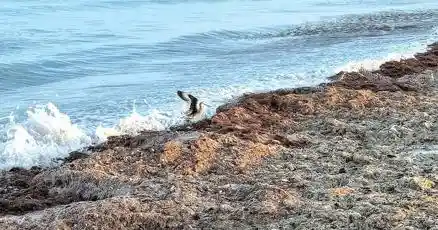
Sargassum seaweed piles up on Marco Beach as turtle season hits 162 nests
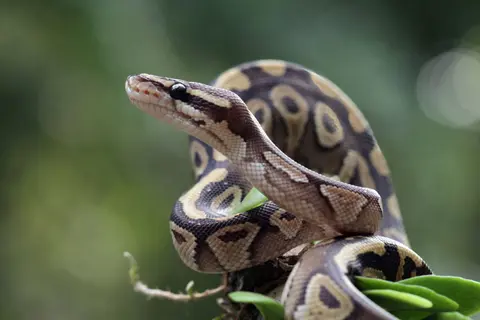
A dog spots a 3ft python under the door in Honolulu, and eight police turn up
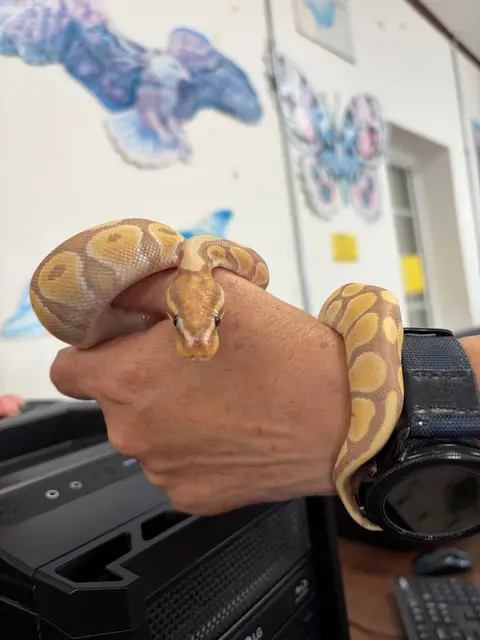
Piedmont library's critter day brings snakes, geckos and a tortoise

Man stops mid-ride to rescue a snake hiding in his bike
Humane Society International calls for an end to the wild turtle trade