
Piedmont library's critter day brings snakes, geckos and a tortoise
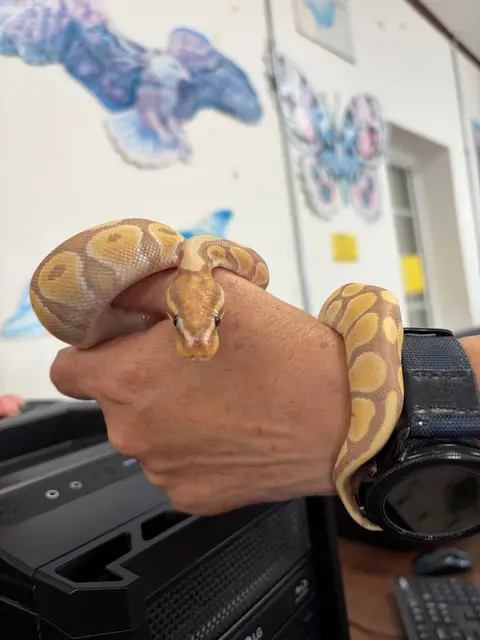
Piedmont Public Library welcomed Piedmont Pet Planet on July 23, giving guests of all ages a close look at snakes, geckos, a bearded dragon and a Sulcata turtle, plus tips on reptile care.
Libraries have become one of the more common venues for programmes like this one. A summer reading programme needs events that bring families in, and a visiting animal handler supplies something a library cannot otherwise offer: an hour that is genuinely different from a storytime. For the store taking part it is straightforward outreach, and for the children attending it is often the first time they have been within arm's reach of a live snake.
On the afternoon of July 23, the Piedmont Public Library hosted an event featuring the Piedmont Pet Planet, which welcomed guests of all ages to visit and learn about how to care for a reptile.
The pets they brought to show included: five ball pythons, two leopard geckos (one adult and one baby), one African Fat Tail gecko, two crested geckos, one Kenyan Sand Boa, one bearded dragon, and one Sulcata Turtle. During the presentation, children were kept captivated by the reptiles and the funny things they'd do while the Piedmont Pet Planet employees talked about them. They talked and showed all their reptiles to children eager to listen. " The oldest ball python known was at the St. Louis Zoo; he lived to be 62 years old," Piedmont Pet Planet shared. " 62?? That's crazy," replied an astonished child in the audience. Ball pythons, on average, live up to 30 years and get as big as 6 ft. long.
Lifespan is the detail that surprises people most in a talk of this kind, and it is the one that most needs saying. A child asking about a snake is generally thinking in terms of a hamster's two or three years, and a pet that may still be alive when that child finishes university is a commitment of a completely different order. The handler's point lands because the audience can do the arithmetic themselves.
They also shared during this presentation the diets and lifespans of several other reptiles, with bearded dragons having an average lifespan of 8-12 years and geckos having a lifespan of 10-30 years.
The spread between those two figures is wide because "gecko" covers a large number of species with very different requirements. Leopard and African fat-tailed geckos are terrestrial desert species kept dry, while crested geckos are arboreal and need humidity and vertical space, so the enclosure, the heating and the food differ even though both are sold under the same word. Diet varies in the same way: bearded dragons are omnivores that eat insects and vegetation, crested geckos take fruit and prepared diets, and the geckos in the insectivore group need live food that has itself been fed properly.
We tend to think of reptiles as cold, emotionless beings, as the media suggests, but is that true? The answer is no. Reptiles can pick up on emotions too, just like cats and dogs can. "Bearded dragons even cuddle up with you when they know you are sad," Piedmont Pet Planet said.
What handlers usually mean by this is more modest than it sounds: a reptile kept and handled regularly learns to associate a person with warmth and food, and will seek out body heat and stay still against it rather than scrambling away. That is a real and observable behaviour, and it is enough to make the point a handler wants to make to a room of children without claiming anything about the animal's inner life.
Reptiles make very good pets for people with small homes, as they can stay contained in an enclosure; however, "responsibility and husbandry" are the most important aspects of owning a reptile, Piedmont Pet Planet said.
Husbandry is the word the trade uses for everything that is not feeding: the temperature gradient across the enclosure, the lighting, the humidity, the substrate, the size of the enclosure as the animal grows. It matters more for reptiles than for mammals because a reptile cannot compensate for a wrong environment. A bearded dragon kept without the right UVB lighting and basking temperature will develop metabolic bone disease regardless of how well it is fed, and that is the failure mode most often behind the animals surrendered to rescues.
The program concluded with reptile petting where eager children and adults got in line to bravely pet snakes and bearded dragons.
Handling at the end is the part that makes the event stick. Being allowed to touch an animal, after an hour of being told how to look after one, is what converts the information into something a child repeats at home — and it is also, from the store's point of view, the moment a child decides that a reptile is something they would like to keep.
That is also why the care information matters as much as the animals do. A child who goes home wanting a bearded dragon is a parent who will be making the purchase, and the difference between a pet that thrives and one that ends up neglected is usually decided before the animal is bought, by whether the enclosure and lighting were budgeted for at the same time as the animal itself.
Camp Danger introduces kids to spiders, pocket dragons and Vlad the Impaler

Sargassum seaweed piles up on Marco Beach as turtle season hits 162 nests
A dog spots a 3ft python under the door in Honolulu, and eight police turn up

Man stops mid-ride to rescue a snake hiding in his bike

Humane Society International calls for an end to the wild turtle trade

Two arrested over lemur and spider monkey photo sessions in Baltimore County