
Peppa Pig's new season tells George's hearing loss story
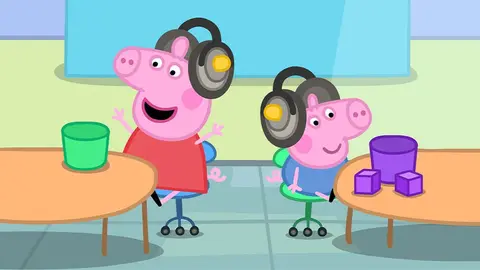
Hasbro's Peppa Pig is returning for its 11th season with new episodes that weave George's previously announced deafness into the series' official storyline.
George's deafness was announced publicly before this season, and the new episodes mark the point where it becomes part of the story rather than a background detail. Building a season around a diagnosis gives the show room to portray the ordinary parts of it — appointments, equipment, family adjustments — in the same register as everything else the characters do.
Airing in the U.S. starting March 23, the new season will explore George's hearing loss journey and its impact on the Pig family, beginning with his diagnosis in the episode "Hearing Test." In the story, George is fitted for his first hearing aid by his audiologist, voiced by Jodie Ounsley, the first deaf female rugby player to represent England. Across the remaining episodes, viewers follow George as he discovers new sounds, learns more about deafness, and even says Peppa's name for the very first time.
Childhood hearing loss is far more common than many parents expect before it affects their own family. Temporary conductive loss caused by fluid in the middle ear is one of the most frequent reasons young children are referred for hearing tests, and permanent sensorineural loss is present from birth or acquired in a significant number of children. A diagnosis is usually followed by a period of adjustment: hearing aids or other devices, follow-up appointments, and speech and language support that continues for years.
Casting the audiologist role with a deaf actor is the kind of detail representation campaigns push for, on the argument that children should see people like themselves in the parts of a story that involve their own experience. Voicing the clinician rather than only the patient also places a deaf adult in a position of professional authority on screen.
The choice to have George say Peppa's name for the first time is a deliberate narrative beat. For a child who has just been fitted with hearing aids, hearing and producing speech are tied to what the devices make audible, and that connection is the part of the story most likely to land with families who have been through it.
Running the story across a season rather than a single episode also mirrors the real timeline. A hearing test is one appointment; learning to use hearing aids, discovering sounds that were previously inaudible, and adjusting how a family communicates takes months, which is closer to what the episodes are depicting.
When shaping the storyline, Hasbro turned to the National Deaf Children's Society and deaf executive producer and script consultant Camilla Arnold to ensure George's story authentically reflected the experiences of real-world deaf kids and their families. Reinforcing its commitment to representation, Hasbro is also partnering with the Hearing Loss Association of America throughout the year to create events and resources that raise awareness for hearing health.
Consulting a specialist charity is standard practice for productions handling a medical or disability storyline, and it tends to affect the details rather than the plot. Organisations representing deaf children typically advise on how a diagnosis is actually delivered, what the equipment looks like and does, and the vocabulary families use around it — the things that make a storyline recognisable to the children watching.
Children's programming has moved steadily toward including disabled characters as regular cast rather than as one-off episodes about disability. The reasoning from advocacy groups is straightforward: children who do not have that experience encounter it as ordinary, and children who do see themselves reflected in something their peers also watch.
Other accessible Peppa Pig content will also be available on the recently launched Peppa Pig Sign Language for Kids YouTube channel, including episodes interpreted into British Sign Language and American Sign Language.
British Sign Language and American Sign Language are separate languages rather than signed versions of English, and providing interpreted episodes in both reflects that the series has a substantial audience on either side of the Atlantic. A dedicated sign-language channel also gives deaf children access to episodes that are not reliant on spoken dialogue or captions alone.
Beyond the screen, the first toy to feature George with his hearing aid is available now: Peppa Pig Joke & Sing George. Intended for ages 3 and up, this interactive figure features more than 50 different sound and music effects, including jokes, muddy puddle splashes, and hit songs from the series, such as "Dinosaur Dance" and "Let's Jump In." The George figure is available now at mass retailers.
Toy lines tied to a storyline arrive at the point where representation becomes something a child can hold. An interactive figure in this category typically combines recorded phrases with sound effects and songs from the series; the significance here is that the character is sold with the hearing aid as part of the design rather than as a separate accessory.
Peppa Pig Season 11 premieres in the U.S. on Nickelodeon March 23 at 10 a.m. EST. For more information about the series and how Hasbro is championing deaf representation, visit peppapig.com.
How the season is received will likely be judged on whether it holds to that approach: treating hearing loss as part of the character's life rather than as a problem to be resolved inside a single plot.
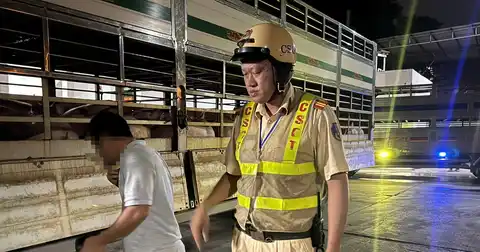
Police in Ho Chi Minh City stop two trucks carrying over 200 pigs positive for salbutamol
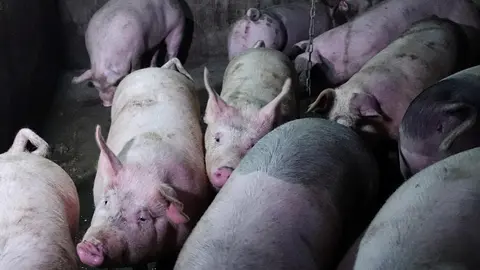
Veterinary department culls 31 pigs at Rohit Sahu's farm

Illa Langi's paddock-to-plate pork is starting to pay off
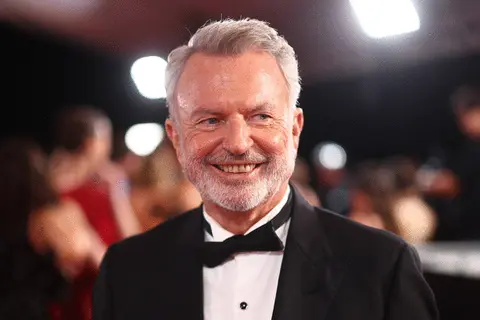
The time Sam Neill did yoga with his pig

This World Cup season, the goal is stopping African swine fever
Feral pigs tear through farmland in New South Wales