
Varanasi to move hundreds of meat and fish shops to the city outskirts
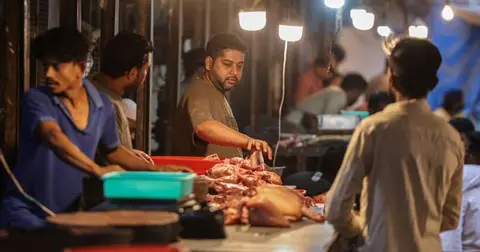
The municipal corporation in Uttar Pradesh's Varanasi has approved a proposal to have meat and fish shops relocated to the outskirts of the city, The Hindu reported on Sunday.
Municipal corporations in India are the bodies responsible for markets, trade licences and public sanitation within a city, and relocating an entire category of shop is not an unusual exercise of that authority. What makes proposals of this kind contentious is that they change where traders can earn, rather than only how they operate.
Around 350 to 400 meat and fish shops operate in the city, Varanasi Municipal Corporation's Public Relations Officer Sandeep Srivastava was quoted as saying.
Meat and fish retail in Indian cities is largely a small-business trade. Most shops are single-outlet family operations with thin margins, little cold storage beyond ice, and a customer base built up over years in one location. A relocation therefore affects more than premises: it resets the relationships that keep such a shop solvent, which is why traders' associations usually ask for compensation, transition time and allotment guarantees before accepting a move.
During a meeting of the corporation's governing body on Saturday, Municipal Commissioner Himanshu Nagpal said that the shops would be shifted to five locations: Ramnagar, Sujabad, Ganeshpur, Avleshpur and Shivpur.
Concentrating scattered shops into a smaller number of designated locations is the standard administrative logic behind a relocation. Waste from meat and fish stalls — offal, bones, wash water — needs drainage and collection that older market lanes in dense city centres often lack, and a purpose-built site can also be laid out for cleaning and inspection. The trade-off is footfall: a shop moved several kilometres out of a neighbourhood loses the customers who used to pass it on the way home.
The move was intended to improve sanitation and optimise the operation of such markets while ensuring that consumers continue to have access to meat and fish shops, PTI quoted unidentified officials as saying.
Ensuring continued access is the part that determines whether a relocation works in practice. Traders in these markets typically serve a local customer base on foot, and meat and fish are bought fresh and often daily. If the new sites are not reachable by public transport or sit too far from the populations that relied on the old shops, the practical result is that the trade contracts rather than moves.
However, the Congress said that the decision was unconstitutional.
"Such a decision goes against the right to livelihood, which is the fundamental right to earn a living with dignity, and it amounts to depriving a large population of their means of survival," Congress national secretary Shahnawaz Alam was quoted as saying by The Hindu.
The constitutional point being invoked is a familiar one. The right to livelihood has been read into the right to life under Article 21 of the Constitution, and courts have generally held that while the state may regulate a trade in the public interest, a regulation that effectively prevents people from earning a living must be reasonable and proportionate. Whether a relocation crosses that line usually depends on the detail: whether alternative sites are viable, whether traders were consulted, and whether the move is temporary or permanent.
Alam contended that the move was part of a broader design to "impose uniformity on the Hindu society".
The objection reflects a broader pattern of disputes over meat sales in Indian cities, where municipal decisions on slaughterhouses, meat shops and the sale of meat around religious festivals have been challenged both for their effect on livelihoods and for what critics describe as their targeting of particular communities. Supporters of such measures generally frame them as sanitation and public order measures applied to a trade rather than to a group.
Ahead of Bakrid, the Varanasi Municipal Corporation had closed down a decades-old goat market in the city, claiming that it had received complaints about overcrowding and poor sanitation.
Closing a market ahead of a festival in which demand peaks is the kind of timing that draws scrutiny, because it removes supply at the point it is most needed. The corporation's stated reasons were overcrowding and sanitation, which are the grounds typically cited for action against informal or seasonal markets operating beyond their licensed capacity.
Bakrid, also known as Eid al-Adha, is a Muslim festival that commemorates the spirit of sacrifice. The festival, which is traditionally marked by the slaughtering of goats, was observed on May 28.
Similar restrictions on the sale of meat have been proposed in other cities as well.
In April, the Haridwar Municipal Corporation approved a proposal to ban the sale of raw meat within city limits ahead of the Ardh Kumbh. The 45-day-long Ardh Kumbh will begin on January 14, 2027, the day of the Hindu festival of Makar Sankranti.
Restrictions tied to large religious gatherings follow a different logic from permanent relocations. Ardh Kumbh draws very large numbers of pilgrims to Haridwar, and authorities planning for it have to manage waste, crowd movement and food supply at a scale the city does not normally handle. Temporary bans on raw meat sales during such periods are presented as a public-order measure for the duration of the event.
What happens next will depend on how the relocation is sequenced. Proposals approved by a corporation's governing body still require sites to be readied and shops to be allotted, and in most cases the traders affected turn to the courts or to the state government once an order reaches them. The gap between approval and implementation is usually where disputes of this kind are actually settled.
Seabirds feed the reef fish below them; take the birds away and the food chain shifts

A second tongue-eating parasite turns up in Mexican snapper

An underwater proposal at Cape Town's Two Oceans aquarium wins hearts

First known transmissible cancer found in catfish

Six of Marineland's 30 belugas airlifted to safety

MPA Day returns, with events across South Africa's marine protected areas