
Odisha grows more fish than it needs, and still imports for variety
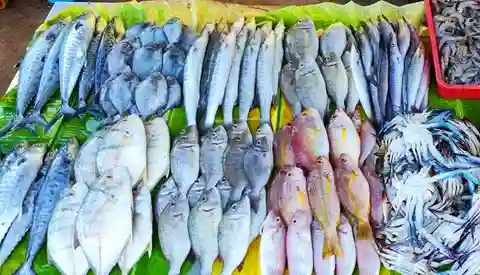
Bhubaneswar: Odisha's annual requirement of fish, meat and eggs remains substantial, with limited dependence on imports and no confirmed evidence of harmful chemical contamination, Fisheries and Animal Resources Development Minister Gokulananda Mallick informed the Assembly on Wednesday.
The figures were given in a written reply to a question in the Assembly, which is the standard route for this kind of statistical disclosure: a member files a question and the minister responds with departmental data on the record. That is why the numbers arrive as a block of production, import and consumption figures rather than as a policy announcement.
Replying to aquestion by BJP MLA Tankadhar Tripathy, the Minister in a written reply said the State's annual fish requirement for 2024-25 is estimated at 9.06 lakh metric tonnes, while production stands higher at 11.92 lakh metric tonnes.
In these figures a lakh is 100,000 and a crore is 10 million, so the State puts its annual fish requirement at roughly 906,000 tonnes against production of about 1.19 million tonnes. Odisha's position as a producer reflects its geography: a long coastline on the Bay of Bengal, an extensive network of estuaries and brackish-water lagoons, and a large inland aquaculture base.
Despite surplus production, Odisha imports 29,731 metric tonnes of fish, primarily to meet demand for freshwater varieties. Of this, 28,871 MT comes from Andhra Pradesh, followed by 600 MT from West Bengal and 260 MT from Chhattisgarh.
A surplus state importing fish is less contradictory than it sounds. What moves across a state border is usually about variety and price rather than volume: consumers in one region want species that are farmed or landed elsewhere, and traders follow that demand. The import figure here is small relative to total production — well under three per cent — which is consistent with filling specific gaps rather than covering a shortfall.
Andhra Pradesh's dominance in that trade is not surprising. It is among India's largest producers of both fish and eggs, and its hatchery and feed infrastructure supplies markets well beyond its own borders, which is why it appears on both the fish and the egg sides of Odisha's trade.
Addressing concerns over the use of hormones and chemicals in fish farming, Mallick clarified that such inputs are used only in scientifically regulated and limited quantities. Hormones like Ovaprim and Ovatide are applied for induced breeding and monosex culture, particularly in species such as Rohu, Catla, Mrigal and Tilapia. Chemicals including lime, bleaching powder and potassium permanganate are used for pond preparation, water quality management and disease control.
The species named — Rohu, Catla and Mrigal — are the Indian major carps that form the backbone of freshwater aquaculture in the country, with Tilapia farmed alongside them. Induced breeding is routine in hatcheries: these carp species do not spawn reliably in still pond water, so a hormone preparation is used to trigger spawning and produce seed under controlled conditions rather than depending on riverine breeding.
Monosex culture is a separate practice, most commonly associated with tilapia. Male tilapia grow faster and more uniformly than females and do not divert energy into reproduction, so stocking all-male populations gives a more predictable harvest. It is a production decision rather than a residue issue in the final product, though it is one of the practices that draws public scrutiny when the word hormone is used loosely.
The inputs listed — lime, bleaching powder and potassium permanganate — are standard pond-management chemicals rather than growth promoters. Lime conditions pond soil and stabilises pH between cycles, bleaching powder disinfects a pond before stocking, and potassium permanganate is used against external parasites and bacterial conditions. Their use is about preparing and maintaining water quality, and the dose and any withholding period matter more than the substance itself.
"These practices are carried out under expert guidance, keeping environmental safety and human health in mind," he said, adding that the government is providing training to farmers to ensure safe and responsible aquaculture practices.
On other protein sources, the Minister stated that Odisha's annual meat requirement is 4.3 lakh metric tonnes, while egg consumption demand stands at 503 crore units.
Separating the three protein sources is what makes the picture legible. Fish is the one where the State produces a clear surplus, eggs are the one where trade runs in both directions in roughly equal volume, and meat is the largest single requirement by weight.
To bridge the demand-supply gap, around 90 crore eggs are imported annually from States such as Andhra Pradesh and Telangana. At the same time, Odisha exports a similar quantity of eggs to West Bengal and the North-Eastern region, indicating a dynamic inter-state trade balance.
Importing and exporting roughly the same quantity of eggs is a sign of a market that is integrated rather than short. Odisha buys from Andhra Pradesh and Telangana and sells to West Bengal and the North-Eastern states, which is what trade looks like when transport costs and regional price differences are doing the work rather than a shortage.
Regarding concerns over the use of harmful hormones or chemicals in meat and eggs, the Minister said no such information is available with the government.
That answer is an absence of data rather than a clean bill of health, and it is worth reading that way. Residue testing capacity and enforcement are what would turn the statement into an assurance, and neither was part of the figures tabled.
Seabirds feed the reef fish below them; take the birds away and the food chain shifts
A second tongue-eating parasite turns up in Mexican snapper

An underwater proposal at Cape Town's Two Oceans aquarium wins hearts
First known transmissible cancer found in catfish
Six of Marineland's 30 belugas airlifted to safety

MPA Day returns, with events across South Africa's marine protected areas