
Hummingbirds are back in Southwest Virginia
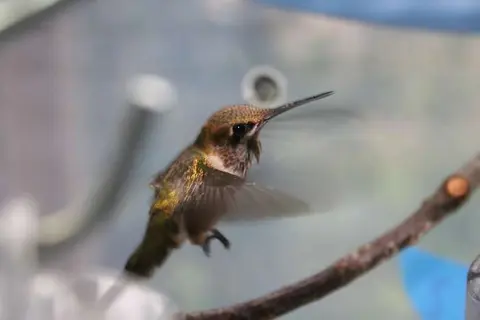
Our favorite tiny travelers have arrived in Southwest Virginia! According to the Southwest Virginia Wildlife Center, hummingbird season is underway, and these little birds are already making appearances in the area.
The arrival is one of the more reliable seasonal markers in the region. Because hummingbirds cannot survive a winter where insects and nectar are unavailable, their return is tied to food rather than to temperature alone, and the first sightings each spring tend to cluster around the flowering plants and feeders that are already in use. Wildlife centres and rehab organisations are usually among the first to hear about it, since the same people who run feeders are the people who call when something is wrong.
Hummingbirds travel thousands of miles each year, with a few even making the nonstop trek across the Gulf of Mexico in a single flight. Out of the 350 species of hummingbirds found around the world, only 15 breed in the United States. The ruby-throated hummingbird is the one you're most likely to spot in our region. While rare, someone might catch a glimpse of a rufous or Allen's hummingbird, but those sightings are far from the norm.
A nonstop Gulf crossing is only possible because of how a hummingbird stores energy. The bird puts on substantial fat reserves before departure and burns them through the flight, which is why the days before migration are spent feeding almost continuously. It is also why a feeder put out early in the season can matter more than it appears to: a bird arriving depleted needs to refuel immediately, and the interval between arrival and the first flowers can be a matter of days.
Recommended VideosIf you're hoping to spot one, keep an eye out for the males first. They usually arrive ahead of the females and can be recognized by their bright red throats. The females tend to show up just a little later.
Males arriving first is standard for migratory birds, since holding a territory ahead of the females improves a male's chances of mating once they arrive. The red throat patch is the field mark people are told to look for, though it is worth knowing that it reads as black in poor light and only flashes red when the light hits it at the right angle. Females lack the patch entirely and are identified by size, shape and behaviour rather than by colour.
Have you spotted any hummingbirds in your area? Send us your pics here: wsls.com/pins
Planning on putting your hummingbird feeder out? Here are some tips the Southwest Virginia Wildlife Center recommends:
Nectar feeders are a genuine supplement and also a genuine responsibility. A feeder concentrates birds at one point, which is exactly the condition under which disease spreads between them, and sugar water in warm weather ferments and grows mould within days. Cleaned correctly and often, a feeder is harmless; left to go cloudy and black, it is one of the more common sources of the sick hummingbirds that wildlife rehabilitators are called out for.
Clean your feeders every 3-5 days with a mixture of 1 part bleach to 10 parts water; be sure to clean the inside thoroughly, too.Ensure you're using the proper water-to-sugar ratio, which is 1/4 cup of sugar to 1 cup of water. Bring the solution to a boil and then let it cool before setting out. Leftover sugar water can be refrigerated for up to a week.Never leave out a dirty feeder! This can develop a fungus that causes a hummingbird's tongue to swell, which prevents them from being able to withdraw their tongue. This condition, called Hummers Candidiasis, means they can't eat and they will slowly starve to death.Do not use dyes, honey, molasses or raw sugar. If the syrup looks cloudy after being stored for a long time, do not use it.Avoid placing the feeder in direct sunlight as this will make the water go bad even faster.
The ratio is worth getting right rather than approximating. Ordinary table sugar dissolved in water is close to the sugar concentration of the flower nectar these birds feed on, and a stronger mix is harder for them to process and more likely to ferment. Honey and molasses are excluded for a different reason: both carry moulds and bacteria that sugar water does not, and honey in particular ferments quickly in a feeder.
Shade does more than slow spoilage. A feeder in full sun can heat to a point where the solution is unpleasant to drink and the plastic ports warp, while one hung in partial shade stays usable between cleanings. Hanging it near a window or within sight of a seating area also has a practical benefit, since the quickest way to know when a feeder needs attention is to be able to see it from indoors.
Feeders are only part of what brings hummingbirds into a garden, and arguably not the most important part. Nectar supplies sugar, but the protein these birds need comes from small insects and spiders, and females feeding nestlings depend on that far more than on any feeder. Planting native tubular flowers gives them both, and it also means the birds have a food source in the weeks before the feeders go up and after they come down.

At least 655 pigeons shot at London Tube stations during a cull

The seven-year-old behind the viral bird calls reveals what's next
What a trip to the Falklands taught me about penguins
One simple change will keep small birds coming to your birdbath all summer
Pigeons cracked a problem built to defeat rule-followers, and it says something about AI

Florence County Library brings in an exotic animal rescue